If you’re serious about visibility in search, you need to start using schema markup. This structured data tells search engines exactly what your content means, not just what it says, so they can display richer, more accurate results.
Schema isn’t just about getting a fancy result in Google’s SERPs anymore. It also increases your chances of being cited in AI-generated summaries Search engines are moving toward generative results, and structured data is now a key signal of authority and clarity.
Key Takeaways
- Schema markup is a type of structured data that helps search engines understand the meaning behind your content, not just the text itself.
- Sites using SEO schema markup often see improved click-through rates. Users get more context directly in the results, which drives more clicks.
- Generative AI search tools now use structured data, which makes schema markup even more valuable for visibility.
- Many websites still don’t fully implement schema, so using it correctly gives you an advantage over less-optimized competitors.
What is Schema Markup?
Schema markup is a form of structured data that tells search engines what your content means, not just what it says. It uses a standardized vocabulary from schema.org to label specific pieces of information, like an article’s author, a product’s price, or a recipe’s cooking time.
Here’s an example of the end result of some schema in action, showcasing added details for a recipe:
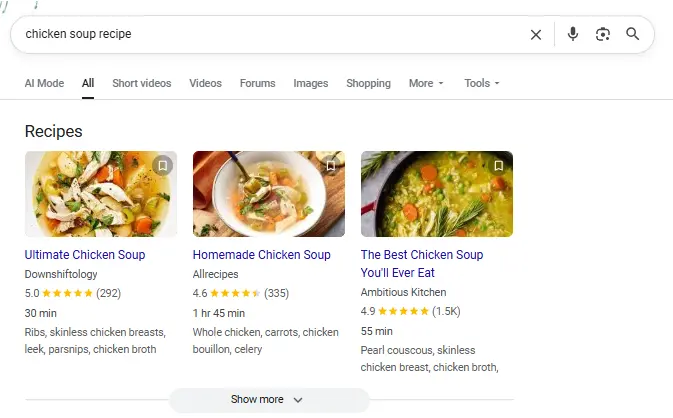
When you add schema to your HTML, it doesn’t change how your page looks to users, but it helps search engines interpret your content more accurately. That’s how you get things like star ratings, event dates, or FAQ dropdowns in SERPs.
Schema improves categorization by giving structure to information that would otherwise be unstructured or ambiguous. That extra clarity supports more precise indexing and increases your chances of appearing with rich results.
Most content online is considered unstructured data, which means it’s readable by humans but harder for machines to interpret. Schema adds structure that makes meaning explicit, bridging the gap between your content and how search engines understand it.
Types of Schema Markup
There are dozens of schema types, but only a handful consistently drive SEO value. The key is knowing which formats align with your goals and content structure. Here are the high-impact schema types you should focus on:
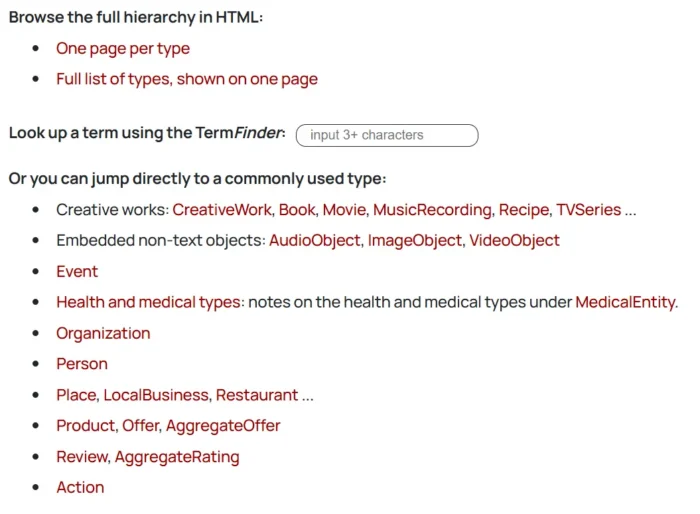
Commonly Used and SEO-Driven
- Article: Use this for blog posts, news, or editorial content. It supports elements like headlines, bylines, and publication dates, helping your content stand out in organic results.
- FAQ: Can make your page eligible for expandable Q&A boxes beneath your page title. A strong option for capturing more SERP space. FAQ schema works especially well on service or solution pages.
- Product and Review: Must-haves for e-commerce. These display key details like price, availability, and customer ratings.
- Local Business: Ideal for brick-and-mortar locations or service areas. It includes address, hours, contact info, and geo coordinates.
Event: Showcases information for webinars, conferences, or in-person events like date, time, location, and ticket availability. - Breadcrumb: Enhances your site’s navigational trail in search results. It also helps search engines better understand your site’s structure.
Underutilized but High-Impact Schema Types
- Video: Helps search engines surface and display videos with rich details like thumbnails, duration, and key moments.
- Course: Designed for online education content. Includes fields for course name, description, provider, and learning outcomes.
- Job Posting: If you’re listing open roles on your website, this schema can push them into Google Jobs with structured info like salary, qualifications, and deadlines.
- Software Application: Highlights app features, pricing, platform compatibility, and reviews. Ideal for SaaS companies or digital products.
There are also industry-specific schema types for recipes, medical conditions, real estate listings, and more, each designed to help content stand out in competitive niches.
While most websites stick to just one or two schema types, combining them across relevant pages gives Google a clearer picture of your site and can increase eligibility for multiple rich result formats.
Why is Schema Markup Important For SEO?
Schema markup doesn’t directly impact rankings, but it can improve how your pages appear in search by making your content easier for search engines to understand. When used correctly, it clarifies the structure and intent behind your content, which improves how your pages appear in search results.
With SEO schema markup, your listings can include extra context like star ratings, pricing, or FAQs, making them more informative and more likely to be clicked when rich results appear. These enhanced listings improve visibility and help searchers understand your content before visiting your site, which supports better engagement and user satisfaction.
Structured data also improves the user experience by giving searchers helpful, structured details before they even land on your site. This kind of clarity reduces bounce rates and increases engagement, which are both positive behavioral signals.
To be clear, Google has stated that structured data is not a direct ranking factor. But it can improve how your content is understood and discovered in search.
“Structured data is not used for ranking purposes, but it can enable search result enhancements and content discovery.” — Google Search Central
If you’re not using schema markup yet, you’re likely leaving visibility and traffic on the table, especially in crowded search spaces.
Schema Markup And AI
As search shifts toward generative results, schema markup becomes increasingly valuable, not as a ranking signal, but as structured clarity that helps machines interpret content consistently at scale. Tools like Google’s AI overviews, ChatGPT, and other large language models increasingly reference or infer structured relationships in your content. While schema markup isn’t directly parsed by every AI tool, it provides a framework that reinforces meaning, credibility, and context.
In Google’s case, schema can increase the chances of being featured or cited in AI-generated summaries by making your content more machine-readable. Clear, structured data helps Google understand which parts of your content are most relevant to a query, and that’s exactly what fuels AI-powered result boxes.
It also supports consistency across platforms, ensuring that search engines, crawlers, and third-party tools are all interpreting your information the same way. That’s critical in a landscape where content can be surfaced in snippets, carousels, voice results, and generative interfaces.
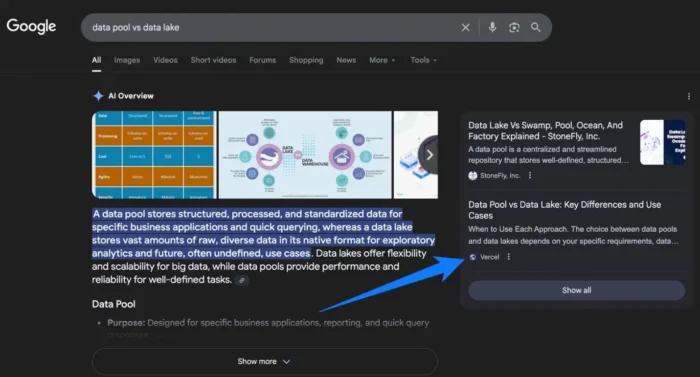
As AI continues to reshape search behavior, structured data plays a critical role in making your content visible and machine-readable across evolving search experiences.
How to Create Schema Markup for SEO
There’s no single way to implement SEO schema markup. The right method depends on your setup, your tools, and how much control you want over the code.
Schema Markup Generators
Schema generators are great to help create your schema type so you don’t have to do it manually. They offer flexibility and control, especially if you want to create cleaner SEO schema markup using JSON-LD.
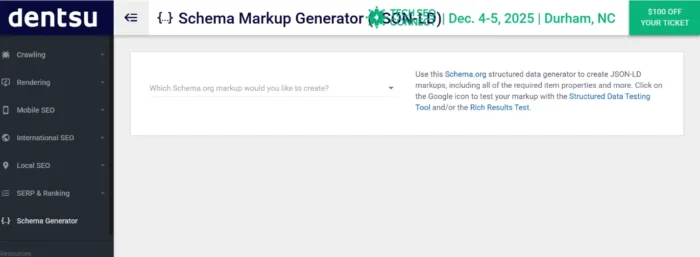
One great option is Dentsu’s Schema Markup Generator. It supports a wide range of schema types and gives you real-time previews of the structured data output.
Another user-friendly pick is Schema.dev, which offers a visual editor for common schema types like Article, Product, Event, and more. It’s great for marketers who want more polish without touching raw code.

If you’re working on technical SEO at scale, tools like RankRanger’s generator or the Hall Analysis tool can help automate more advanced schema needs.
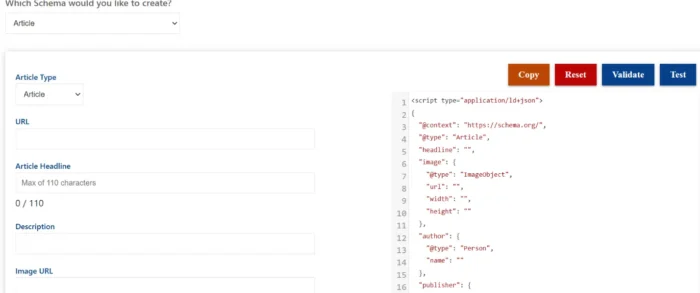
Most of these tools will output JSON-LD code, which you can copy and paste directly into your website’s head tag or through a CMS plugin.
Build Schema Manually
For developers or SEOs who want full control, manually writing SEO schema markup in JSON-LD is the most flexible option. This approach is ideal when you need to nest data types, customize beyond what’s available in generators, or integrate schema into a templated CMS or headless setup.
The most common format for manual schema is JSON-LD, a lightweight data format that can be placed inside a <script type=”application/ld+json”> tag in your HTML.
Schema.org provides documentation and examples for hundreds of item types, including complex combinations like a Product with reviews, availability, and brand info.
While this method takes more effort, it allows you to fine-tune every field and ensure the markup perfectly matches your content structure.
If you’re confident in your technical skills or already working with structured templates, hand-coding schema can unlock the most advanced use cases.
Use WordPress Plugins
If your site runs on WordPress, adding SEO schema markup is straightforward with the right plugin, with no coding required.
Yoast SEO adds basic structured data out of the box, like Article, WebPage, and Organization schema. You can also set defaults for different post types or override schema per page.
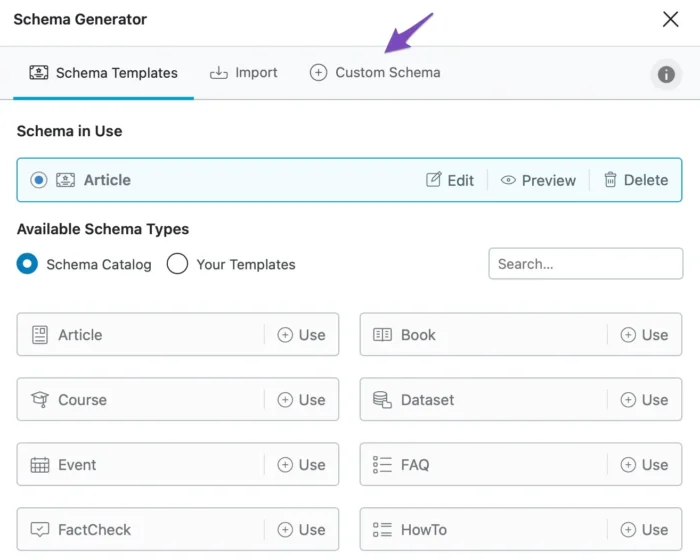
Rank Math offers more flexibility with its built-in Schema Generator. It supports custom fields, nested schema, and additional types like Product, FAQ, and Course. You can add schema site-wide or build it block-by-block using their visual editor.
Another option is the Schema & Structured Data for WP plugin, which offers advanced rule-based schema placement, support for over 30 types, and WooCommerce integration.
Most plugins handle the technical output for you, just select the schema type, fill out the fields, and publish.
Use ChatGPT
ChatGPT is a quick way to generate SEO schema markup without relying on a plugin or tool. It’s especially useful when you want structured data for a specific content type but don’t want to hand-code it from scratch.
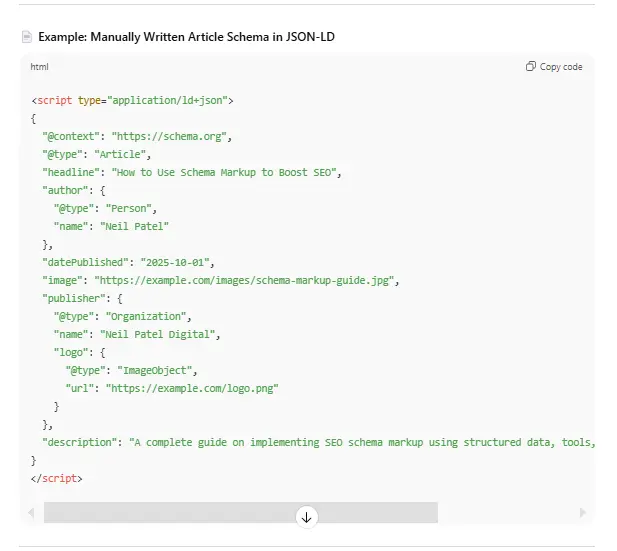
To get started, just ask ChatGPT for the schema you need. For example:
“Create JSON-LD schema markup for a Product with name, price, rating, and availability.”
You can also refine the output by adding more context. Want to include an author bio? Just ask. Need multiple FAQs? List them out, and ChatGPT can format them for you.
The results are typically in valid JSON-LD format and can be copied into your site’s HTML or CMS.
It’s not a replacement for technical SEO tools, but it’s a powerful shortcut when used with the right prompts.
Add Schema Markup to Your Site
Once you’ve created your SEO schema markup, you need to place it on your site where search engines can find it. The most common format is JSON-LD, which should be embedded inside a <script type=”application/ld+json”> tag.
If you’re working directly with code, add the schema to the <head> section of your page, or just before the closing </body> tag. This helps ensure it gets picked up by search crawlers.
If you’re using a CMS like WordPress, Shopify, or Wix, many themes or SEO plugins include fields where you can paste your structured data directly. Just copy your JSON-LD and drop it into the appropriate field.
As we mentioned before, plugin-based setups, tools like Rank Math or Yoast will often insert schema automatically based on your settings, with no manual copy-paste needed.
No matter the method, the goal is the same: get valid, clean schema markup live on your site.
Validate Your Schema
Before you publish any SEO schema markup, you need to validate it. Even small formatting issues can break how search engines read your structured data.
The best place to do this is validator.schema.org.
You can either paste in your raw JSON-LD code or enter the URL of a published page. The tool will scan your markup and return any errors, warnings, or unsupported types.
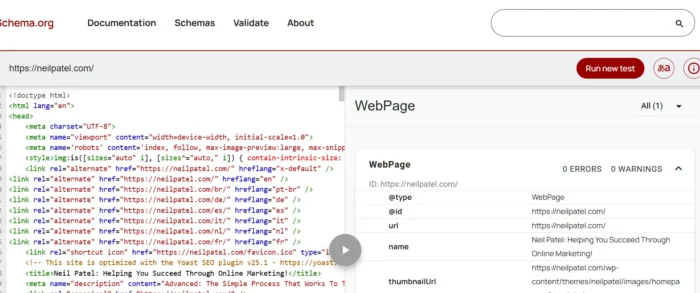
Look for a “Valid” result nd ensure the schema type you used is recognized and correctly implemented. If there are issues, revise your code and re-test until everything passes.
You can also use Google’s Rich Results Test to see if your schema is eligible for enhanced SERP features.
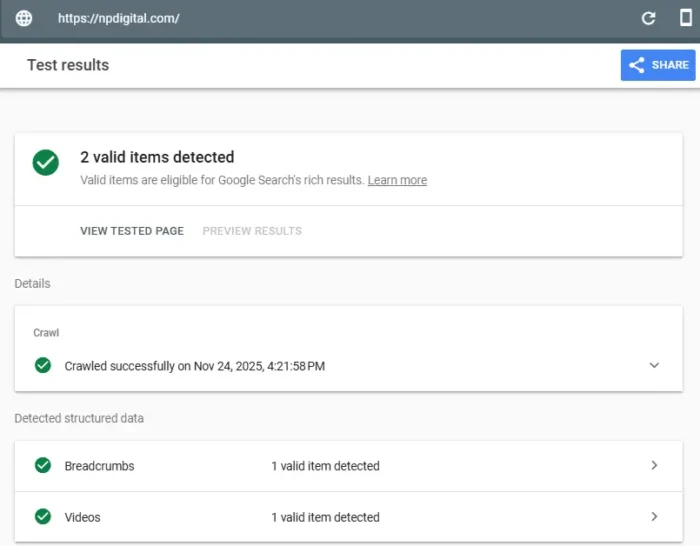
Validation is a small step that ensures your markup actually works and gets you the visibility you’re aiming for.
Best Practices For SEO Schema Markup
To get the most out of your SEO schema markup, you need more than valid code. These best practices help ensure your structured data drives real visibility while staying within Google’s guidelines.
- Only mark up visible, relevant content:
- Don’t tag hidden elements, placeholder content, or anything users can’t actually see.
- Schema should reflect what’s on the page. Misleading or hidden markup can get ignored or flagged.
- Use the most specific schema type available:
- Avoid generic markup. If your content is a recipe, use Recipe schema. If it’s a course, use Course schema. The more specific and accurate, the better.
- Keep your structured data up to date:
- Prices, dates, product availability, and other time-sensitive data should reflect the live content. Inaccurate schema can confuse search engines and users.
- Avoid over-marking or spamming schema types:
- Just because a schema exists doesn’t mean it belongs on your page. Only mark up what’s directly relevant and helpful to the user.
Accurate, helpful schema increases your chances of showing up in enhanced results. Misused or sloppy markup reduces trust and visibility.nd not content in hidden div’s or other hidden page elements.”
FAQs
What is schema markup?
Schema markup is a type of structured data that helps search engines understand the meaning of your content. It uses a shared vocabulary defined by schema.org to label key details like titles, authors, ratings, and more. When implemented correctly, it makes your content eligible for rich results, enhanced listings that display extra information directly in search.
What is schema markup SEO?
Schema markup SEO refers to the use of structured data as part of your overall search optimization strategy. While it doesn’t directly impact rankings, schema enhances how your pages appear in the SERPs. By making content easier to interpret and display, it supports better visibility, higher click-through rates, and alignment with user intent.
Does schema markup help SEO?
Yes, but not in the way most people expect. Schema doesn’t give you a direct ranking boost, but it improves how your pages are presented in search. Rich results stand out more, offer better context to users, and tend to earn more clicks. Schema can improve visibility and click-through rates, which can help your content attract more traffic over time.
Conclusion
Schema markup is one of those SEO techniques that helps to improve how your content appears in search results, yet it’s still underused. It helps search engines understand your pages more clearly, which leads to richer results, better visibility, and more clicks.
Whether you’re optimizing blog content, product listings, or service pages, structured data gives your site a clearer presence in search, and that matters in competitive markets.?