(The Dog Star is a symbol of power, will, and steadfastness of purpose, and exemplifies the One who has succeeded in bridging the lower and higher consciousness. —Astrological Definition)
(The Dog Star is a symbol of power, will, and steadfastness of purpose, and exemplifies the One who has succeeded in bridging the lower and higher consciousness. —Astrological Definition)
(The Dog Star is a symbol of power, will, and steadfastness of purpose, and exemplifies the One who has succeeded in bridging the lower and higher consciousness. —Astrological Definition)
Ahrefs’ Patrick Stox joins Shelley Walsh to talk about the shifting search journey, the limits of LLM attribution, and the importance of brand consistency.
The post Google Isn’t Going Anywhere: Ahrefs Ambassador On LLM Inclusion & Why Relationships Still Win appeared first on Search Engine Journal.
Ahrefs’ Patrick Stox joins Shelley Walsh to talk about the shifting search journey, the limits of LLM attribution, and the importance of brand consistency.
The post Google Isn’t Going Anywhere: Ahrefs Ambassador On LLM Inclusion & Why Relationships Still Win appeared first on Search Engine Journal.
Ahrefs’ Patrick Stox joins Shelley Walsh to talk about the shifting search journey, the limits of LLM attribution, and the importance of brand consistency.
The post Google Isn’t Going Anywhere: Ahrefs Ambassador On LLM Inclusion & Why Relationships Still Win appeared first on Search Engine Journal.

If you create content regularly, you understand the pressure to always be “on”. To be a conveyor belt of ideas. To be writing, filming, editing, posting, and engaging. It’s a lot! And then start the cycle all over again with each new post.
Being a creator can sound like a dream job from the outside, but in reality, it can be exhausting.
So it’s really not surprising to me that 52% of creators admit to experiencing burnout — I’m definitely one of them. If you’re reading this, I’m guessing you get it too.
What weighed down my brain wasn’t even the ‘creation’ part. It was the pressure to remember every single good idea (and the constant fear of losing one) that gave me creative migraines.
I’m a freelancer mom. I don’t spend most of my day in front of my laptop. My best ideas come when my brain relaxes — after I drop my kid at school, while cooking dinner, or just as my head hits the pillow.
And those moments are not always convenient. I can’t just drop what I’m doing just to write.
But my content is how I build my network, stay visible, and find new client work, consistency isn’t optional for me. Losing ideas feels like losing opportunities.
One day, I started brain-dumping an idea into ChatGPT to help me refine it when I had a brainwave. I often used the AI tool as a sounding board for half-baked ideas like the one I was about to enter — my chats had to be a gold mine of unused content.
But how did I dig that gold up? I didn’t want to waste half an hour digging through ChatGPT history just to find and document my old ideas.
Instead of creating, I would be organizing. And that’s the worst kind of energy leak for a creative trying to stay consistent.
I told myself, “If only ChatGPT could regularly pull out my ideas and remind me of the things I said I’d write about… that would be amazing.”
So I made it do exactly that.
Instead of scrambling for notes buried in Google Docs, Google Drive, screenshots, Slack, or my Facebook Messenger (yes, I send messages to myself), I now start the day with a clean menu of original ideas.
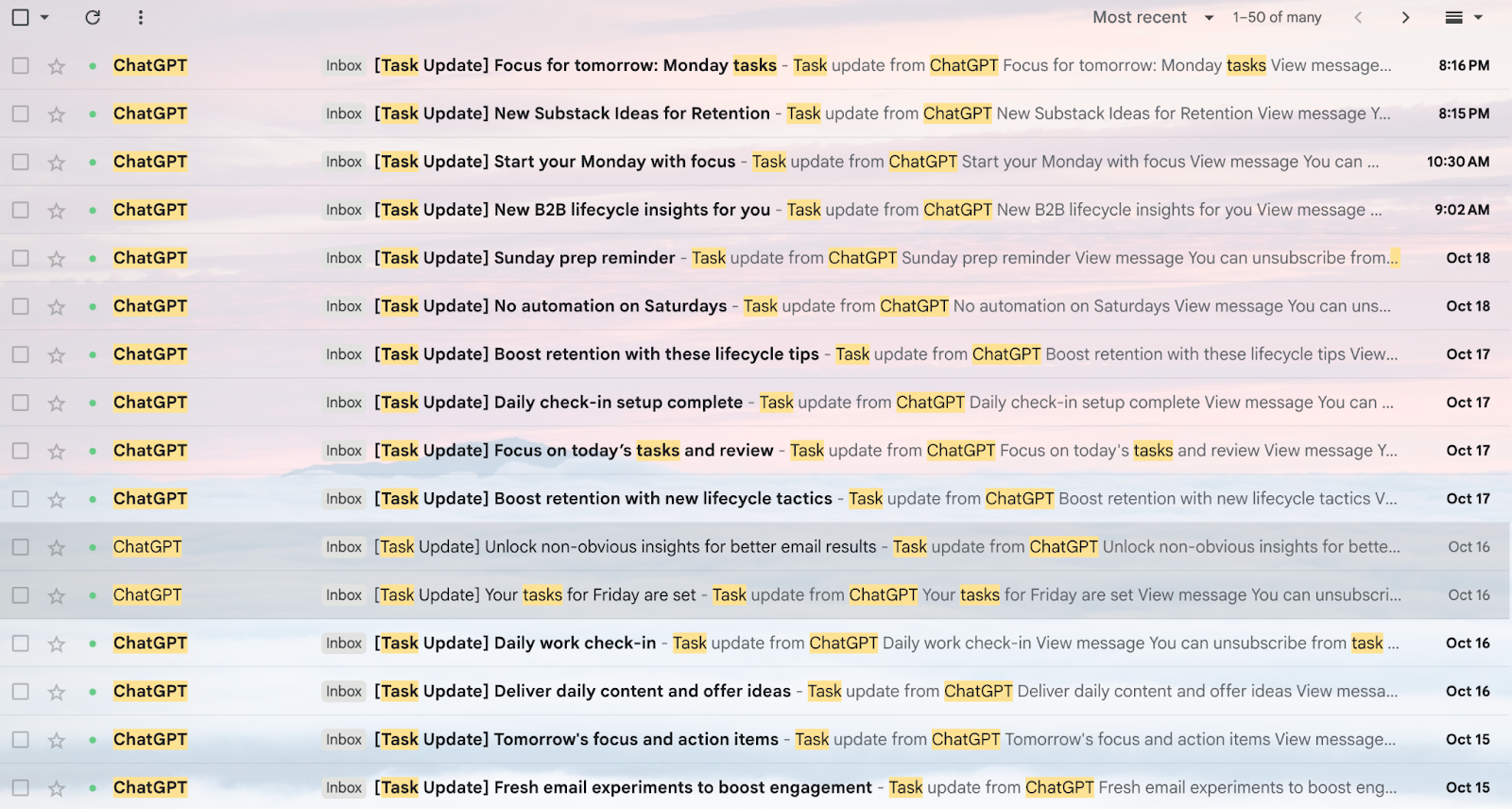
Every morning, I wake up to an email from ChatGPT with my best ideas in it, already categorized.
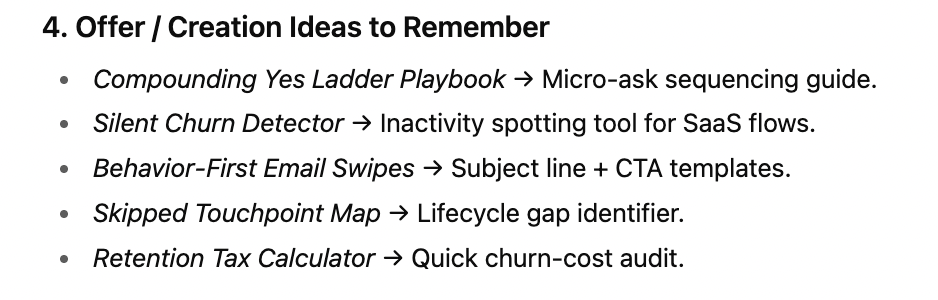
Each morning’s email breaks my chats into 3 neat categories:
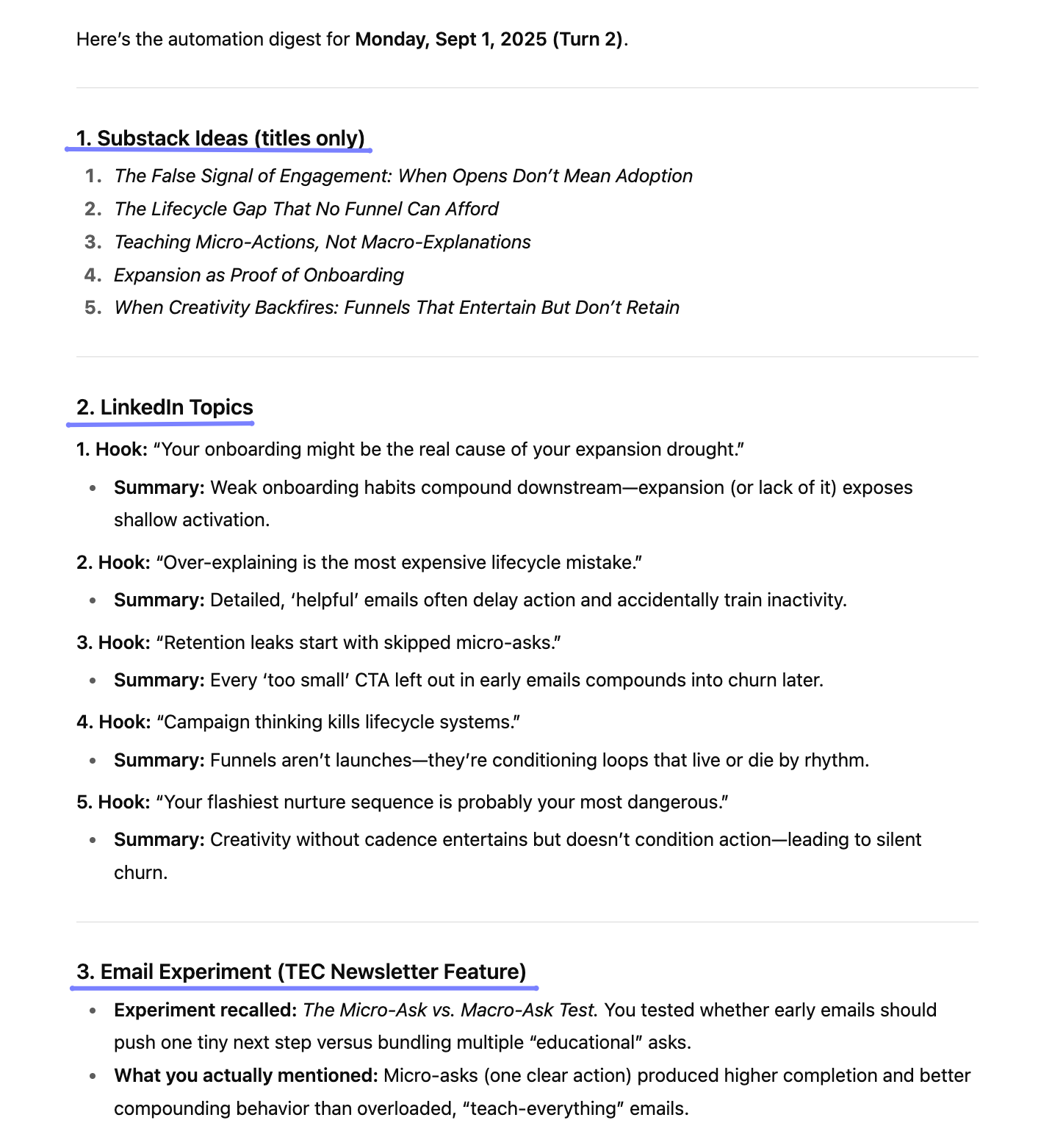
It’s a simple system, but has completely changed how I approach content. And it doesn’t involve any additional tools to work, just email and ChatGPT.
On busy days, those emails serve as my content calendar. On slower days, it’s a soft nudge that helps me ease into creating without overthinking.
This automation helped me:
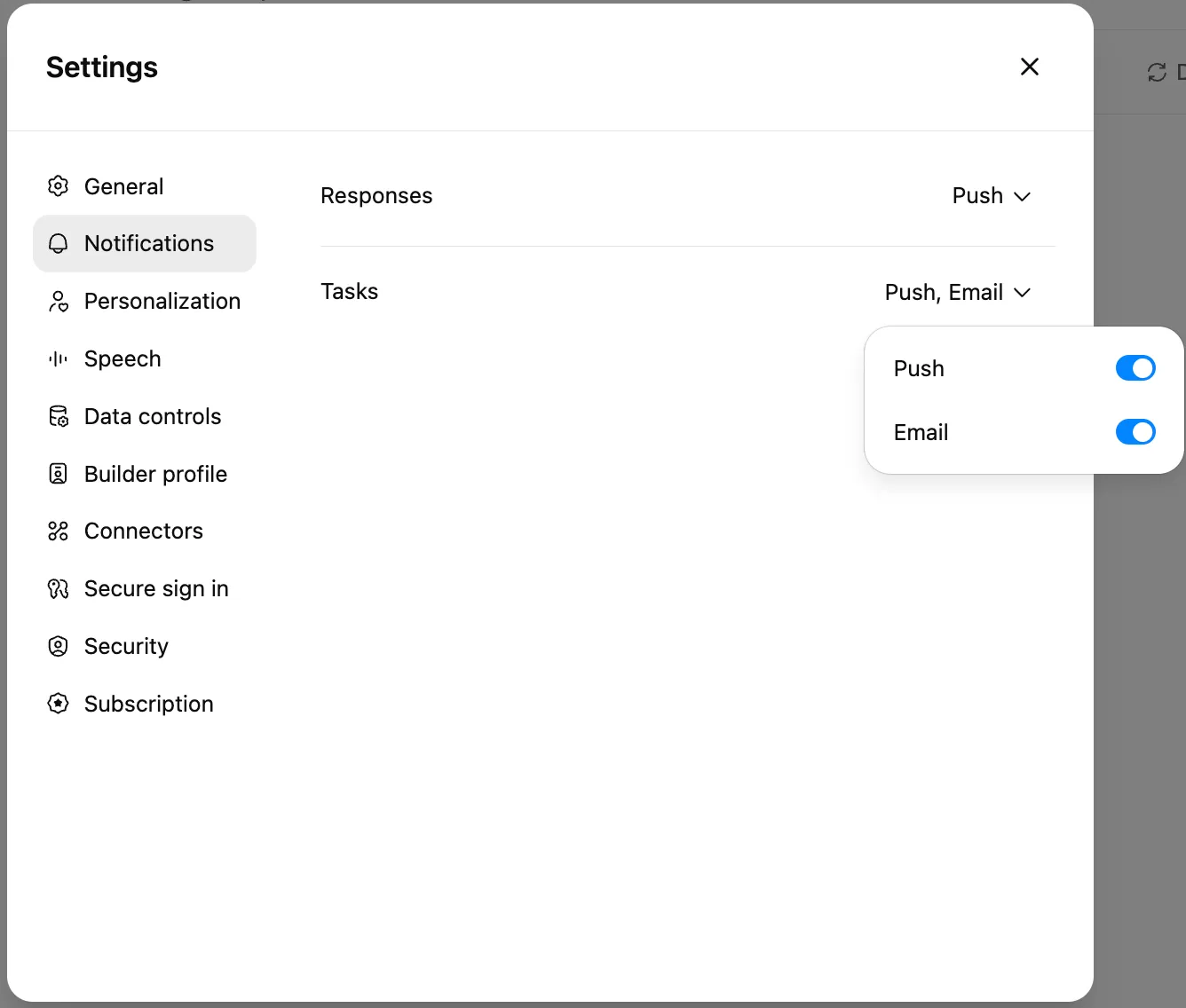
You don’t need technical skills to make this work. You only need:
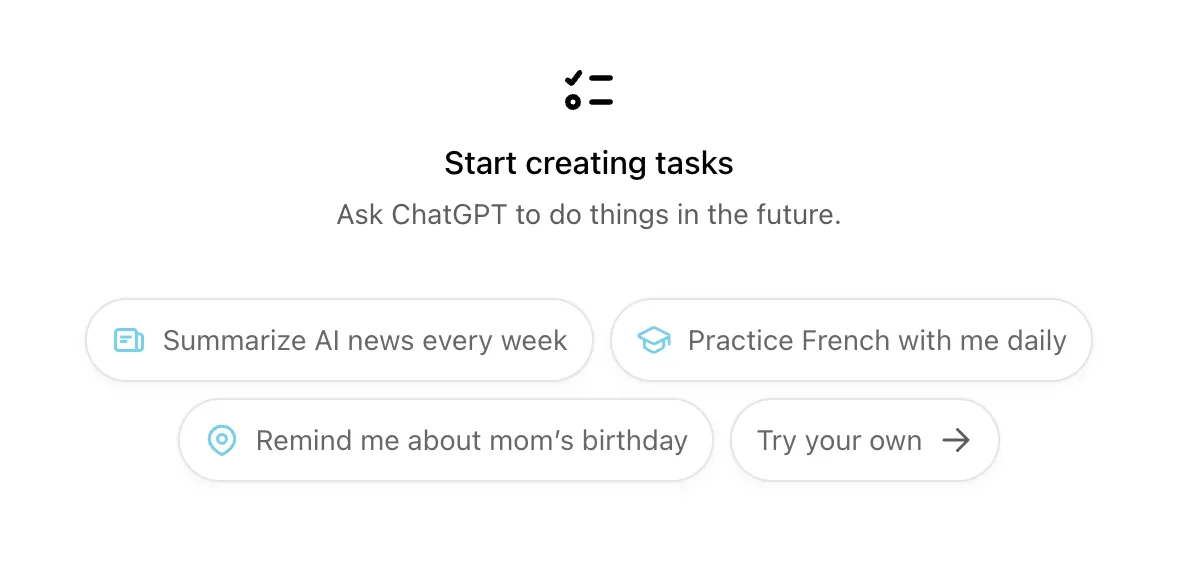
Here’s how to set it up:
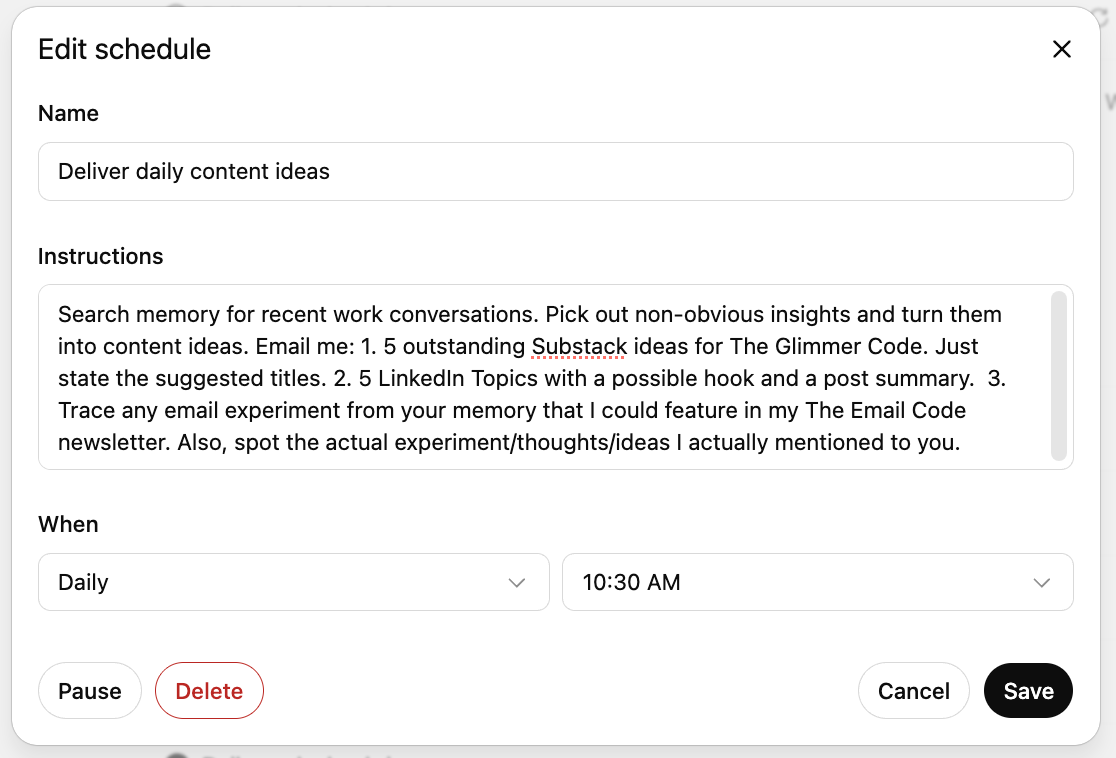
”Search memory for recent work conversations. Pick out non-obvious insights and turn them into content ideas. Email me:
1. 5 outstanding Substack ideas. Just state the suggested titles. 2. 5 LinkedIn Topics with a possible hook and a post summary. 3. Trace any email experiment from your memory. Also, spot the actual experiment/thoughts/ideas I actually mentioned to you.”
Here’s my actual prompt below:
Done.
It feels a bit like I have a second brain — one that doesn’t get tired or forget good ideas when the afternoon slump hits.
Every day at 10:30 a.m., an email lands in my inbox with the ideas I’d normally lose to scattered notes and chaotic systems.

Just opening this email sends me into creation mode. Seeing those half-formed ideas sitting there makes me want to start drafting the post — more often than not, if the idea is good enough, I feel the urge to finish it right then and there.
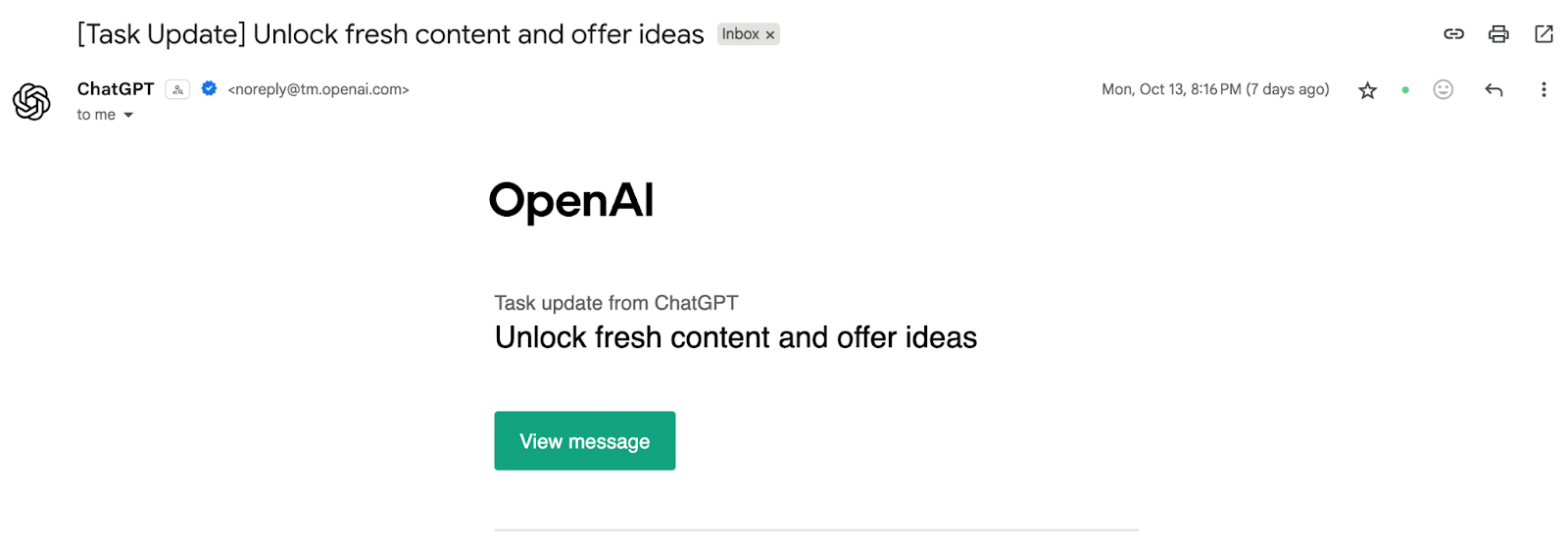
When I click the little green button, it brings me straight to ChatGPT, and I see something like this:
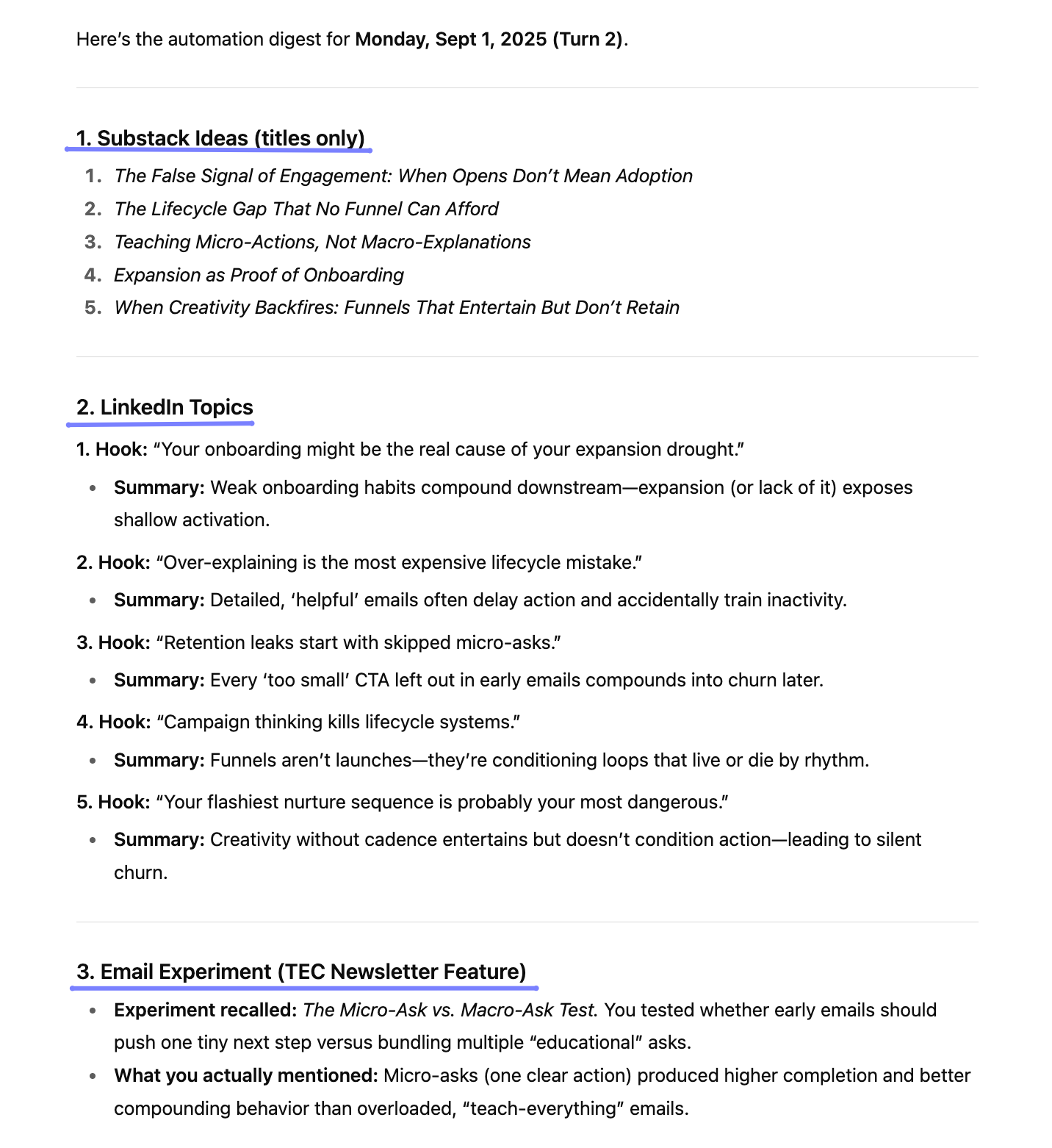
From there, I get to work. While this system is incredibly helpful (if I do say so myself), seasoned content creators will know that where this system ends is where the actual work of creation begins.
I pick out the best ideas from those emails, and I save them to Buffer. More often than not, I’ll start fleshing out some ideas with the Create Space or directly into the post composer.
One time, I came across a post by Alen Sultanic on “Energy Economy” while taking a break from client work. It sparked some ideas, so I dropped the screenshot into ChatGPT, added my own thoughts, and went back to my tasks.
The next day, I revisited it, and turned it into a long-form Substack entry. That piece became one of my best-performing issues — and sparked some of the most thoughtful discussions in the comments.
On days I just can’t get into a writing mood (yes, I still have those), I use the time for lighter creative work, more ideation and content organization. Some things I do:
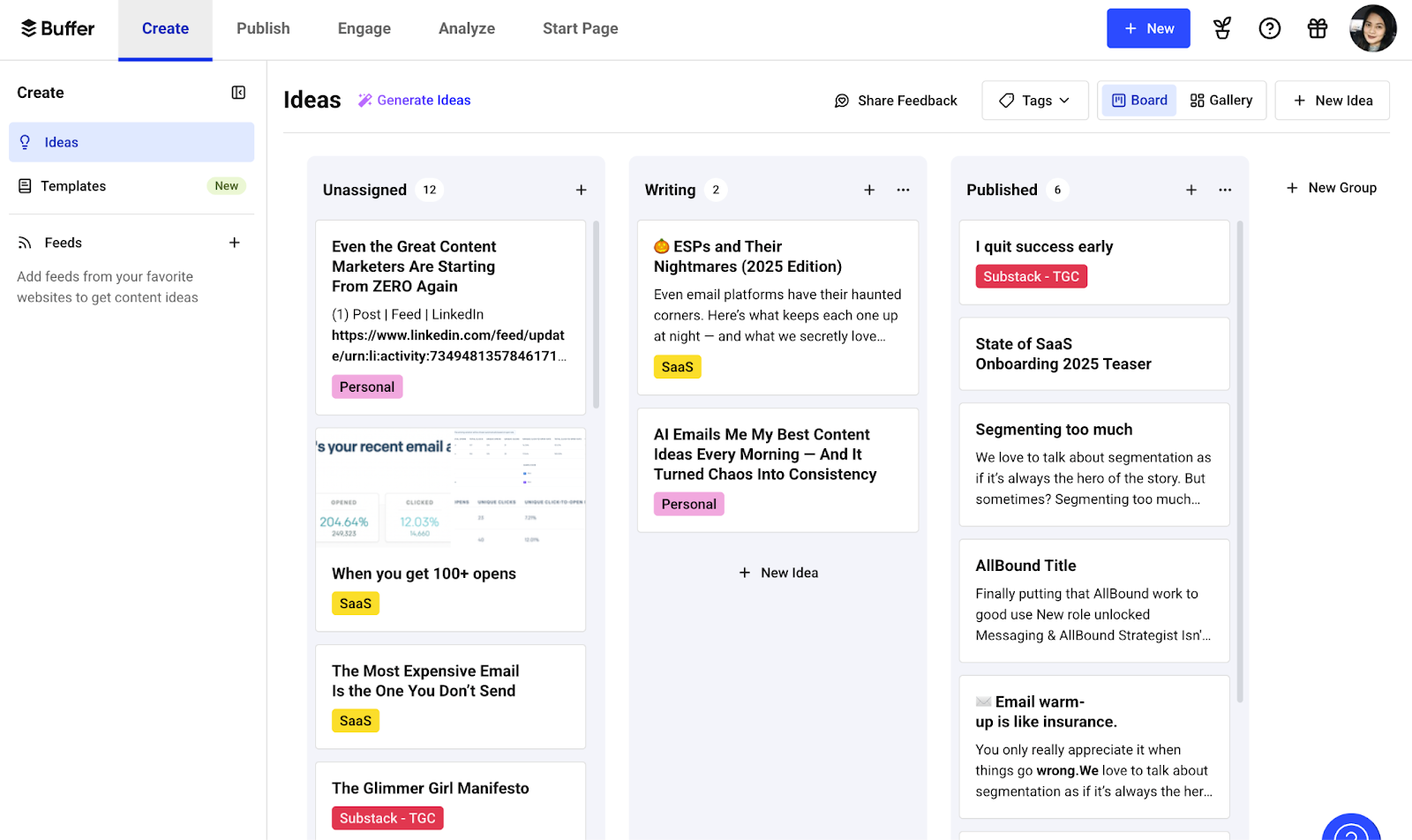
I’ve realized that the secret to consistent content creation for me is not forcing inspiration. It’s just making it easy to start creating.
As Elizabeth Gilbert wrote in Big Magic: “Ideas are driven by a single impulse: to be made manifest. And the only way an idea can be made manifest in our world is through collaboration with a human partner.”
If I ignore them, they’ll move on to someone else. That’s why I save mine. So when they visit, I don’t lose them forever.
Content creation isn’t just about creativity. It’s about capacity, too.
It’s dealing with and managing the mental tabs, the deadlines, the invisible pressure to be “on” all the time.
To protect our creative energy, we need systems that bring back order:
So let AI hoard these half-baked, scattered ideas so you can show up when it’s time to create.
If you create content regularly, you understand the pressure to always be “on”. To be a conveyor belt of ideas. To be writing, filming, editing, posting, and engaging. It’s a lot! And then start the cycle all over again with each new post.
Being a creator can sound like a dream job from the outside, but in reality, it can be exhausting.
So it’s really not surprising to me that 52% of creators admit to experiencing burnout — I’m definitely one of them. If you’re reading this, I’m guessing you get it too.
What weighed down my brain wasn’t even the ‘creation’ part. It was the pressure to remember every single good idea (and the constant fear of losing one) that gave me creative migraines.
I’m a freelancer mom. I don’t spend most of my day in front of my laptop. My best ideas come when my brain relaxes — after I drop my kid at school, while cooking dinner, or just as my head hits the pillow.
And those moments are not always convenient. I can’t just drop what I’m doing just to write.
But my content is how I build my network, stay visible, and find new client work, consistency isn’t optional for me. Losing ideas feels like losing opportunities.
One day, I started brain-dumping an idea into ChatGPT to help me refine it when I had a brainwave. I often used the AI tool as a sounding board for half-baked ideas like the one I was about to enter — my chats had to be a gold mine of unused content.
But how did I dig that gold up? I didn’t want to waste half an hour digging through ChatGPT history just to find and document my old ideas.
Instead of creating, I would be organizing. And that’s the worst kind of energy leak for a creative trying to stay consistent.
I told myself, “If only ChatGPT could regularly pull out my ideas and remind me of the things I said I’d write about… that would be amazing.”
So I made it do exactly that.
Instead of scrambling for notes buried in Google Docs, Google Drive, screenshots, Slack, or my Facebook Messenger (yes, I send messages to myself), I now start the day with a clean menu of original ideas.
Every morning, I wake up to an email from ChatGPT with my best ideas in it, already categorized.
Each morning’s email breaks my chats into 3 neat categories:
It’s a simple system, but has completely changed how I approach content. And it doesn’t involve any additional tools to work, just email and ChatGPT.
On busy days, those emails serve as my content calendar. On slower days, it’s a soft nudge that helps me ease into creating without overthinking.
This automation helped me:
You don’t need technical skills to make this work. You only need:
Here’s how to set it up:
”Search memory for recent work conversations. Pick out non-obvious insights and turn them into content ideas. Email me:
1. 5 outstanding Substack ideas. Just state the suggested titles. 2. 5 LinkedIn Topics with a possible hook and a post summary. 3. Trace any email experiment from your memory. Also, spot the actual experiment/thoughts/ideas I actually mentioned to you.”
Here’s my actual prompt below:
Done.
It feels a bit like I have a second brain — one that doesn’t get tired or forget good ideas when the afternoon slump hits.
Every day at 10:30 a.m., an email lands in my inbox with the ideas I’d normally lose to scattered notes and chaotic systems.
Just opening this email sends me into creation mode. Seeing those half-formed ideas sitting there makes me want to start drafting the post — more often than not, if the idea is good enough, I feel the urge to finish it right then and there.
When I click the little green button, it brings me straight to ChatGPT, and I see something like this:
From there, I get to work. While this system is incredibly helpful (if I do say so myself), seasoned content creators will know that where this system ends is where the actual work of creation begins.
I pick out the best ideas from those emails, and I save them to Buffer. More often than not, I’ll start fleshing out some ideas with the Create Space or directly into the post composer.
One time, I came across a post by Alen Sultanic on “Energy Economy” while taking a break from client work. It sparked some ideas, so I dropped the screenshot into ChatGPT, added my own thoughts, and went back to my tasks.
The next day, I revisited it, and turned it into a long-form Substack entry. That piece became one of my best-performing issues — and sparked some of the most thoughtful discussions in the comments.
On days I just can’t get into a writing mood (yes, I still have those), I use the time for lighter creative work, more ideation and content organization. Some things I do:
I’ve realized that the secret to consistent content creation for me is not forcing inspiration. It’s just making it easy to start creating.
As Elizabeth Gilbert wrote in Big Magic: “Ideas are driven by a single impulse: to be made manifest. And the only way an idea can be made manifest in our world is through collaboration with a human partner.”
If I ignore them, they’ll move on to someone else. That’s why I save mine. So when they visit, I don’t lose them forever.
Content creation isn’t just about creativity. It’s about capacity, too.
It’s dealing with and managing the mental tabs, the deadlines, the invisible pressure to be “on” all the time.
To protect our creative energy, we need systems that bring back order:
So let AI hoard these half-baked, scattered ideas so you can show up when it’s time to create.
If you create content regularly, you understand the pressure to always be “on”. To be a conveyor belt of ideas. To be writing, filming, editing, posting, and engaging. It’s a lot! And then start the cycle all over again with each new post.
Being a creator can sound like a dream job from the outside, but in reality, it can be exhausting.
So it’s really not surprising to me that 52% of creators admit to experiencing burnout — I’m definitely one of them. If you’re reading this, I’m guessing you get it too.
What weighed down my brain wasn’t even the ‘creation’ part. It was the pressure to remember every single good idea (and the constant fear of losing one) that gave me creative migraines.
I’m a freelancer mom. I don’t spend most of my day in front of my laptop. My best ideas come when my brain relaxes — after I drop my kid at school, while cooking dinner, or just as my head hits the pillow.
And those moments are not always convenient. I can’t just drop what I’m doing just to write.
But my content is how I build my network, stay visible, and find new client work, consistency isn’t optional for me. Losing ideas feels like losing opportunities.
One day, I started brain-dumping an idea into ChatGPT to help me refine it when I had a brainwave. I often used the AI tool as a sounding board for half-baked ideas like the one I was about to enter — my chats had to be a gold mine of unused content.
But how did I dig that gold up? I didn’t want to waste half an hour digging through ChatGPT history just to find and document my old ideas.
Instead of creating, I would be organizing. And that’s the worst kind of energy leak for a creative trying to stay consistent.
I told myself, “If only ChatGPT could regularly pull out my ideas and remind me of the things I said I’d write about… that would be amazing.”
So I made it do exactly that.
Instead of scrambling for notes buried in Google Docs, Google Drive, screenshots, Slack, or my Facebook Messenger (yes, I send messages to myself), I now start the day with a clean menu of original ideas.
Every morning, I wake up to an email from ChatGPT with my best ideas in it, already categorized.
Each morning’s email breaks my chats into 3 neat categories:
It’s a simple system, but has completely changed how I approach content. And it doesn’t involve any additional tools to work, just email and ChatGPT.
On busy days, those emails serve as my content calendar. On slower days, it’s a soft nudge that helps me ease into creating without overthinking.
This automation helped me:
You don’t need technical skills to make this work. You only need:
Here’s how to set it up:
”Search memory for recent work conversations. Pick out non-obvious insights and turn them into content ideas. Email me:
1. 5 outstanding Substack ideas. Just state the suggested titles. 2. 5 LinkedIn Topics with a possible hook and a post summary. 3. Trace any email experiment from your memory. Also, spot the actual experiment/thoughts/ideas I actually mentioned to you.”
Here’s my actual prompt below:
Done.
It feels a bit like I have a second brain — one that doesn’t get tired or forget good ideas when the afternoon slump hits.
Every day at 10:30 a.m., an email lands in my inbox with the ideas I’d normally lose to scattered notes and chaotic systems.
Just opening this email sends me into creation mode. Seeing those half-formed ideas sitting there makes me want to start drafting the post — more often than not, if the idea is good enough, I feel the urge to finish it right then and there.
When I click the little green button, it brings me straight to ChatGPT, and I see something like this:
From there, I get to work. While this system is incredibly helpful (if I do say so myself), seasoned content creators will know that where this system ends is where the actual work of creation begins.
I pick out the best ideas from those emails, and I save them to Buffer. More often than not, I’ll start fleshing out some ideas with the Create Space or directly into the post composer.
One time, I came across a post by Alen Sultanic on “Energy Economy” while taking a break from client work. It sparked some ideas, so I dropped the screenshot into ChatGPT, added my own thoughts, and went back to my tasks.
The next day, I revisited it, and turned it into a long-form Substack entry. That piece became one of my best-performing issues — and sparked some of the most thoughtful discussions in the comments.
On days I just can’t get into a writing mood (yes, I still have those), I use the time for lighter creative work, more ideation and content organization. Some things I do:
I’ve realized that the secret to consistent content creation for me is not forcing inspiration. It’s just making it easy to start creating.
As Elizabeth Gilbert wrote in Big Magic: “Ideas are driven by a single impulse: to be made manifest. And the only way an idea can be made manifest in our world is through collaboration with a human partner.”
If I ignore them, they’ll move on to someone else. That’s why I save mine. So when they visit, I don’t lose them forever.
Content creation isn’t just about creativity. It’s about capacity, too.
It’s dealing with and managing the mental tabs, the deadlines, the invisible pressure to be “on” all the time.
To protect our creative energy, we need systems that bring back order:
So let AI hoard these half-baked, scattered ideas so you can show up when it’s time to create.
Gall’s Law is appropriately simple:
“A complex system that works is invariably found to have evolved from a simple system that worked. A complex system designed from scratch never works and cannot be patched up to make it work. You have to start over with a working simple system.”This is why sudden change rarely is, and why persistence and user feedback end up changing the systems that run our world.
Begin.
Learn.
Succeed.
Then add complexity.

TikTok LIVE is a blank canvas that creators and brands have adopted in different ways. Some creators stream games as they would on Twitch. Others perform or create content in real-time on the platform.
Going live on TikTok can help you increase your engagement, reach new audiences, and grow your following.
It’s also a great way to start monetizing your TikTok presence through TikTok Gifts.
If you’re curious about how to go live on TikTok, you’ll need to meet some requirements for TikTok LIVE access:
Once you’re there, you’re ready to start streaming!
In this article, I’ll explain how to go live on TikTok and start connecting with your audience in a new way. First, let’s get the most common question out of the way:
Officially, you need 1,000 followers to go live. However, you can request access through TikTok’s support if you meet other eligibility criteria.
If you’re new to TikTok — or looking to grow your following and engage with your TikTok audience — going live is a good option. It provides a genuine way to connect and can help you find your creative voice on the platform.
TikTok LIVE are displayed to audiences in several unique areas on the app, which means your lives are far less likely to get lost in the noise of the regular TikTok For You Page or Following feed.
For one thing, if you’re a regular TikTok user, you’ll have noticed more lives popping up on your For You Page. The TikTok algorithm seems to be surfacing lives more and more, which means your lives may have a better chance of being shown to more users than regular videos.
On top of that, creators who are currently live get pride of place in the TikTok inbox, with a little pink circle around their profile pictures.
Anecdotally speaking, I tried TikTok LIVE as part of my 30-day TikTok experiment and managed to reach more than 200 completely new people during the random, impromptu coworking session.
While a little intimidating at first, it ended up being really fun! I had some interesting conversations with people who tuned in and netted a couple of new followers, too. It also didn’t require much effort or planning on my part — far less work than my usual content, at any rate — which meant the process offered more bang for my buck in terms of following and engagement.
Key takeaway: Going live regularly gives you more chances to connect with new followers and deepen relationships with your audience.
Before we get into the step-by-step guide to how to go live on TikTok, it’s worth noting that there are now three different ways to live stream on the platform:
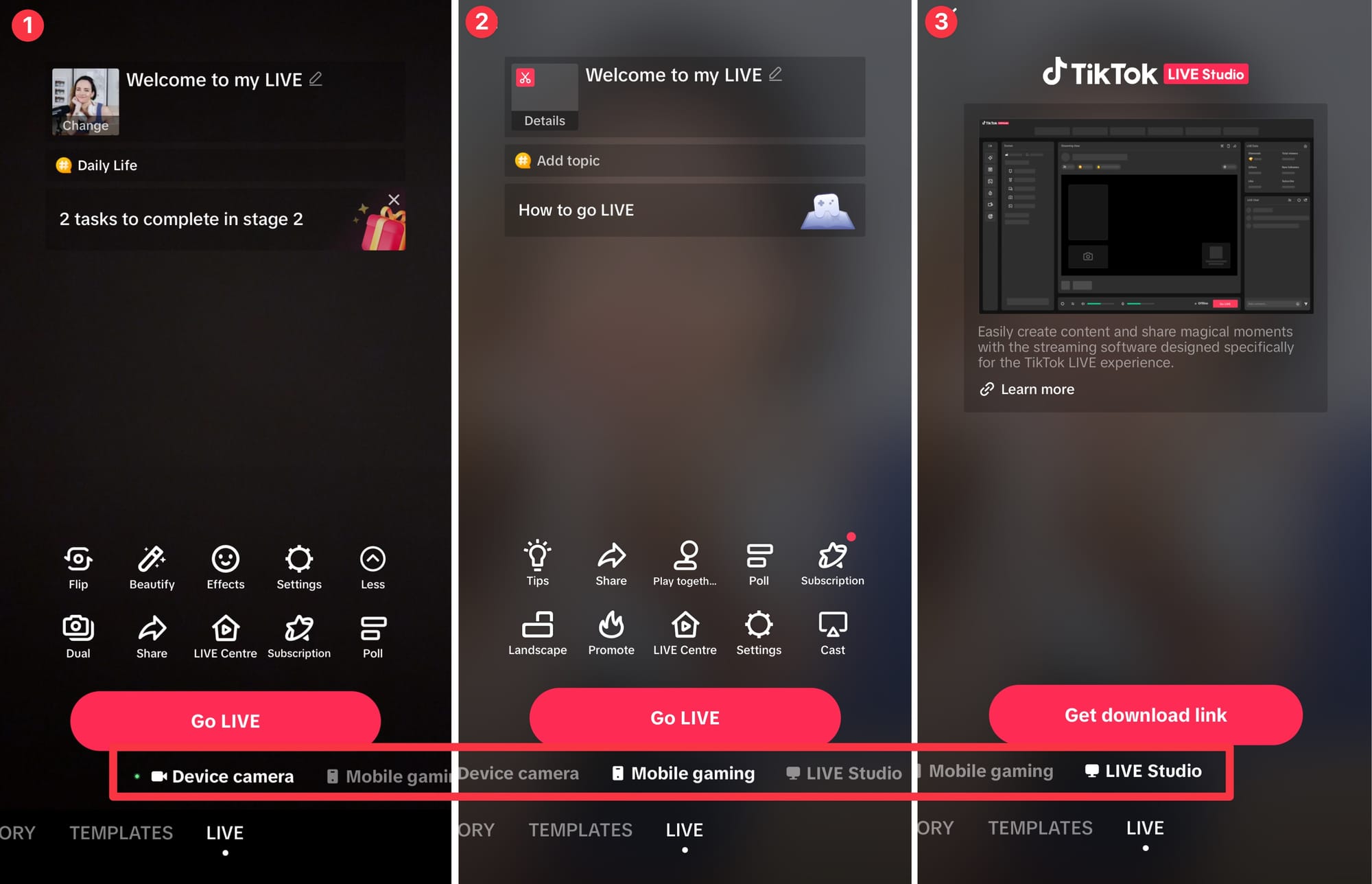
If you’re just starting out (and you’re not a gamer), I recommend trying TikTok LIVE on your phone with the TikTok app first.
💡 Key takeaway: TikTok gives you multiple ways to go live, so you can choose the method that fits your content and audience best.
All the options, features, and settings you can choose on TikTok LIVE
Here’s a rundown of the most useful things you can do before you start your TikTok LIVE (pretty much all of these options will be available to you if you choose TikTok LIVE Studio or the mobile gaming route, too).
The numbers below correspond with those on the screenshot, so you know exactly where to tap to access them.

💡 Key takeaway: Going live on mobile is the fastest way to connect with your followers on the go. You can experiment with different filters or effects to create unique live experiences.
Pro tip: TikTok will stream all the action directly to the app (and anything else you do on your phone, so make sure to turn off notifications if you don’t want personal messages appearing during your live stream.)
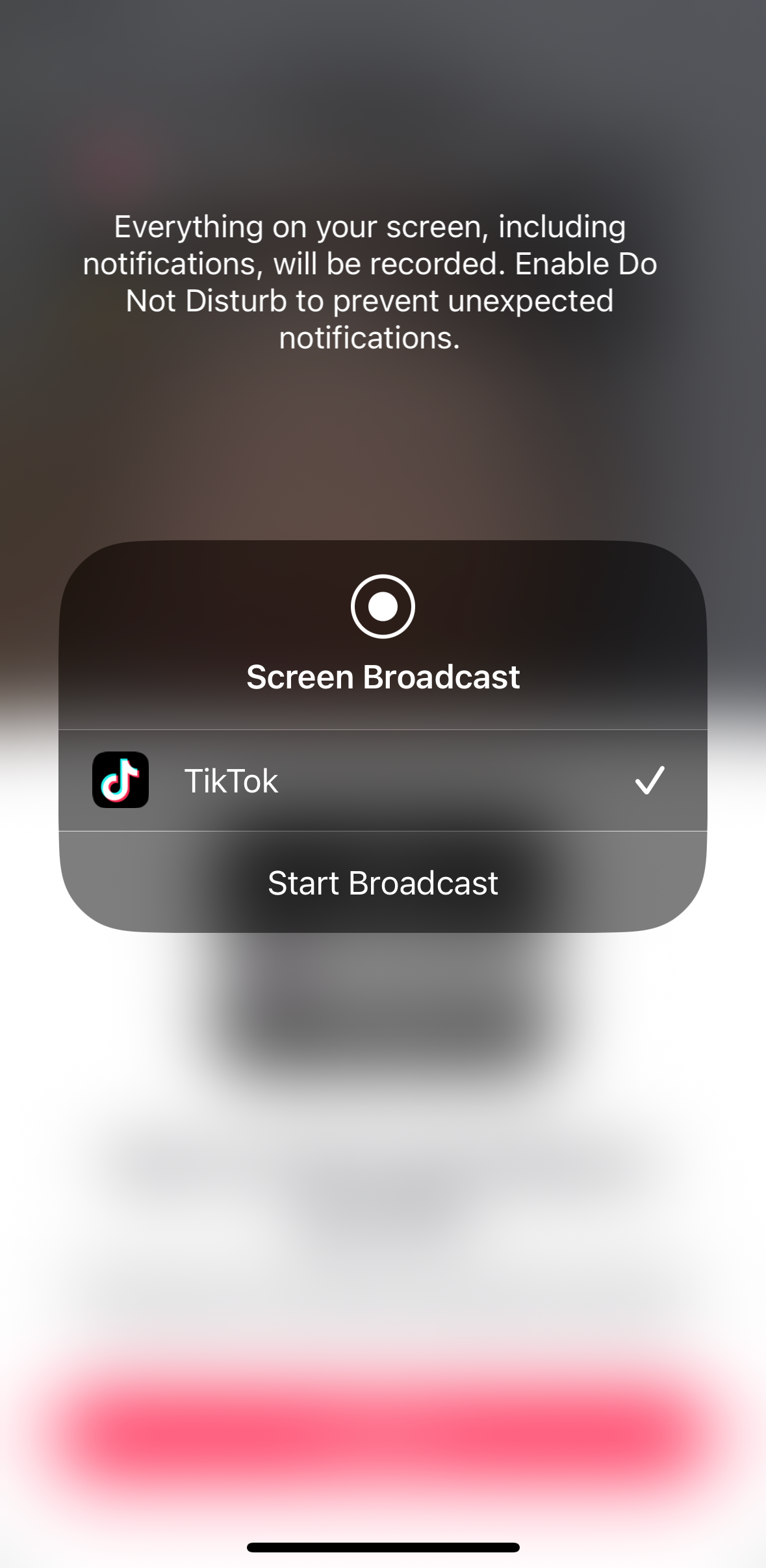
💡 Key takeaway: Gaming mode allows you to connect with fellow gamers in real time. Engaging with viewers while you play can help boost viewer loyalty.
Before we get into it, note that you can only run TikTok LIVE Studio (the official Windows-based livestreaming software, similar to Twitch) on a Windows PC. Mac support is only currently available in Beta.
Here’s how to go live on TikTok using your computer:

Pro tip: For questions or troubleshooting, check out TikTok’s Help Center or find video walkthroughs from creators like TikTok LIVE With Harry.
💡 Key takeaway: TikTok LIVE Studio is a powerful option for creators who want more control over their live streams.
If you want your content to stand out amongst the thousands of other live videos and streams going on at any given moment, you’ll need to be strategic with your live streams.
Here are some tips to consider to keep your live stream interesting and engaging:
Pick a time when your audience will be most active for your live streaming. TikTok’s analytics are pretty robust and help you track follower activity. With this feature, you can see what times and days your followers are most likely to view your content.
To view this data, click on TikTok Studio > Analytics > Followers, then scroll down to Most active times to see when most of your followers are online. (Or check out our guide to TikTok Studio for the most important TikTok metrics).
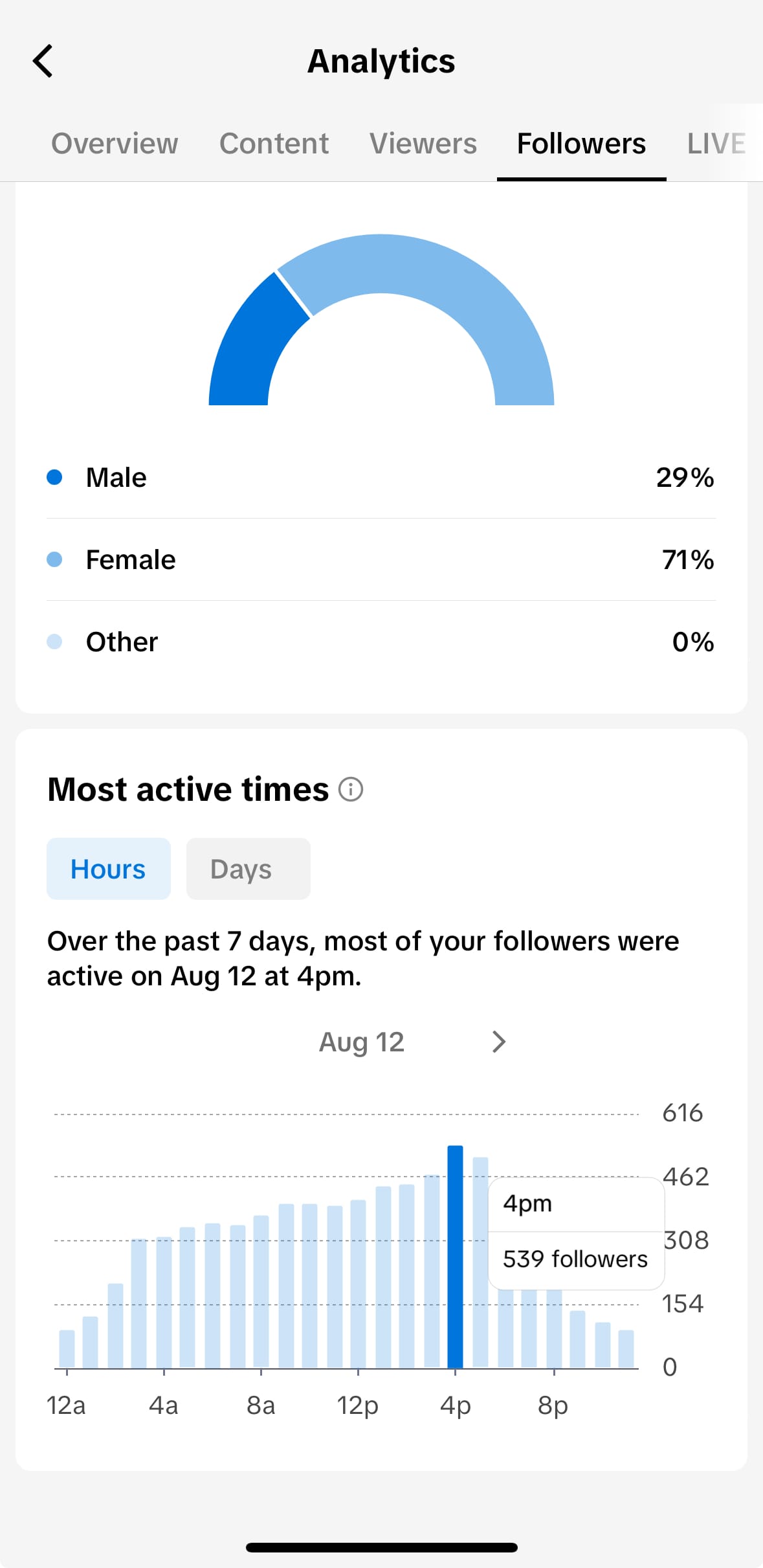
Our TikTok research data may also be helpful here — check out the best times to post on TikTok.
You can go live for about 60 minutes, but TikTok recommends keeping your streams to 30 minutes.
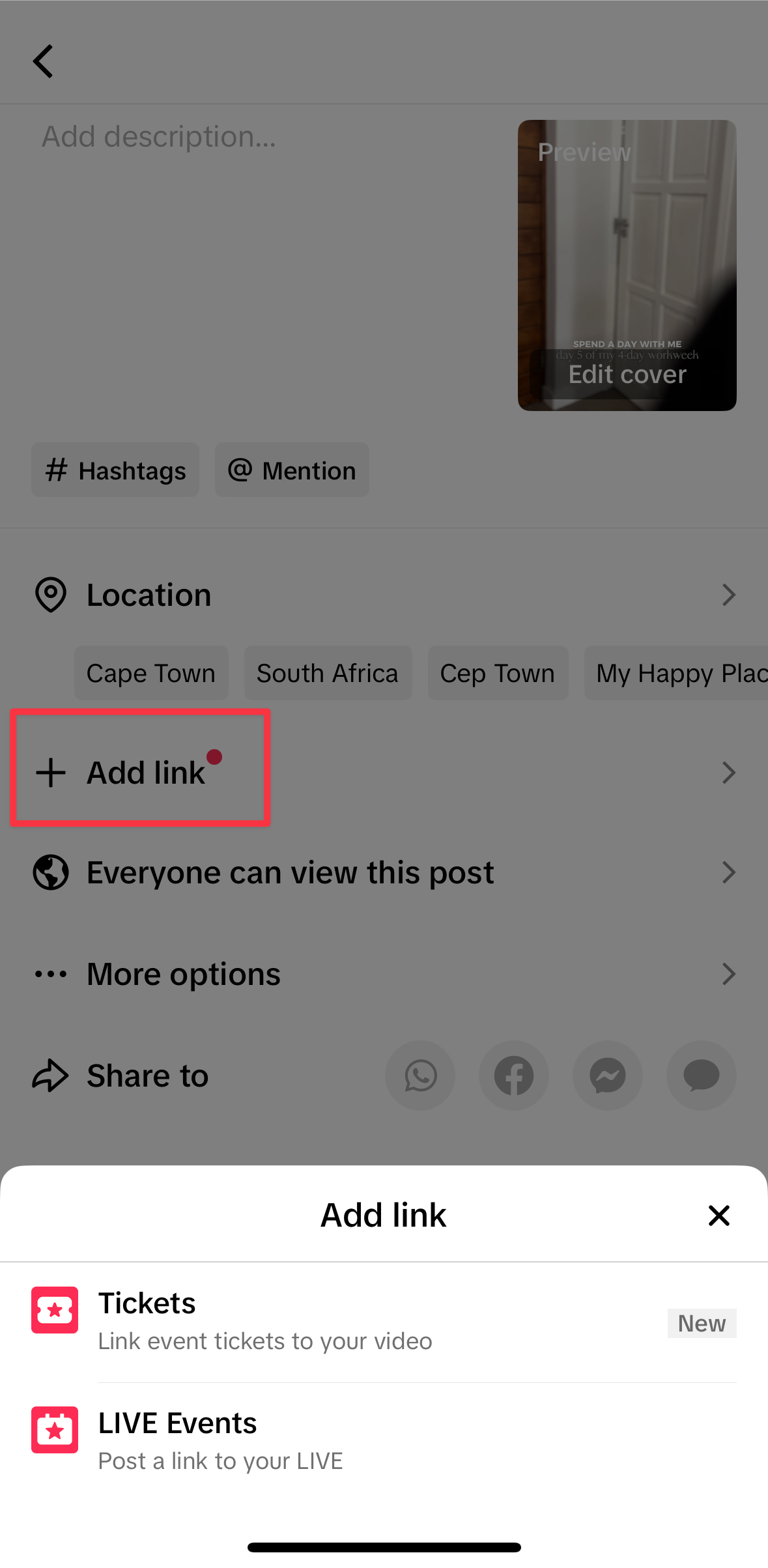
Having a recent video on your followers’ For You or Following page means that they will see a special icon that lets them enter your stream directly. It’s even better if this video shows you telling them when you’ll be going live — you can even choose to add a scheduled TikTok LIVE link to your post by choosing the +Add link option.
Film in a well-lit area with natural lighting, or consider using a ring light. This helps keep your viewers’ attention on you, not distracted by not being able to see well.
Check your Internet connection beforehand to make sure it’s good so you can avoid interruptions to your streaming.
While you don’t need a script, it is beneficial to have a solid set of guidelines — and scheduling your session in advance with TikTok LIVE Events — to stay focused on your live stream.
The best part of TikTok LIVE is being able to interact with your followers in real time. Keep an eye out in the chat and respond to comments, questions, or requests to really connect with your viewers.
You have the option to filter comments, mute viewers from commenting, and block someone from the live stream if you need to.
Whether it’s through behind-the-scenes content, Q&As, or promoting products, the opportunities for TikTok LIVE are endless.
From brands to creators, here are some ideas to use when you go live on TikTok.
TikTok LIVE is an ideal way to engage your audience and answer their questions. If there are questions that come up frequently in the comments, go live on TikTok to answer them! It’s the perfect opportunity to interact in real time with your followers and give them answers.
So, if you’re launching a new product or collection, or just want to connect with your audience, opening up for questions in real time on your live stream can help you build strong relationships with your audience.
Although the feature isn’t available to everyone yet, getting acquainted with TikTok LIVE can give your brand a leg up.
Live shopping will allow brands to integrate the products they share on their TikTok Shopping tab into a live session. This feature connects brands with their audiences in real time while also helping users buy what they discover while watching a brand’s stream. Leverage live shopping to give your audience more opportunities to engage with and shop from your brand.
An easy idea to execute for TikTok LIVE is showing what goes on behind the scenes at your office or in a creative process. It allows you to be more transparent with your audience and give them a peek at what it takes to create content or make a product.
Taking audience requests for creative projects when you go live on TikTok is also a good way to engage and grow your following. Several creators have taken advantage of this format to create personalized items on camera and ship them to their active followers.
You can simultaneously reward your followers while encouraging them to participate in your lives or buy your products.
TikTok LIVE allows you to bring someone “on stage” with you, opening the door for multiple opportunities for collaboration. Creators can work with brands and vice versa on Live interviews, sponsored content, or takeovers, which are popular on Instagram.
💡 Key takeaway: There are endless ways to use TikTok LIVE, from Q&As to product launches, so get creative and make it your own.
Live streaming on TikTok can help you find new followers, increase brand awareness, generate leads, and even drive sales.
But more importantly, it lets TikTok users connect with your community and engage with them on a more intimate level — a level of authenticity that TikTok users have come to expect on the platform.
To go live on TikTok, you must have at least 1,000 followers, be at least 16 years old, and comply with TikTok’s Community Guidelines.
Officially, no — TikTok requires 1,000 followers. But if you’re super keen to try, you can request access through TikTok’s support if you meet other eligibility criteria.
Just open the TikTok app, tap the + icon, swipe to LIVE, add a title, choose filters or effects, and hit Go Live. You can even invite up to five guests or use dual camera mode for extra creativity.
Yes, TikTok has a mobile gaming mode specifically for gamers. Select Gaming when going live, connect your game feed, and stream directly to your audience while interacting in real-time.
TikTok LIVE Studio is a desktop app that lets creators stream from their PC. It gives you more control, like setting scenes, customizing quality, and using advanced settings — perfect for professional streams or PC/console gamers.
Going live is a powerful way to grow your following. It helps you connect with your audience authentically, boost engagement, reach new viewers, strengthen community and loyalty, and potentially monetize your content.